Skiaform RenderAI architectural rendering for Blender
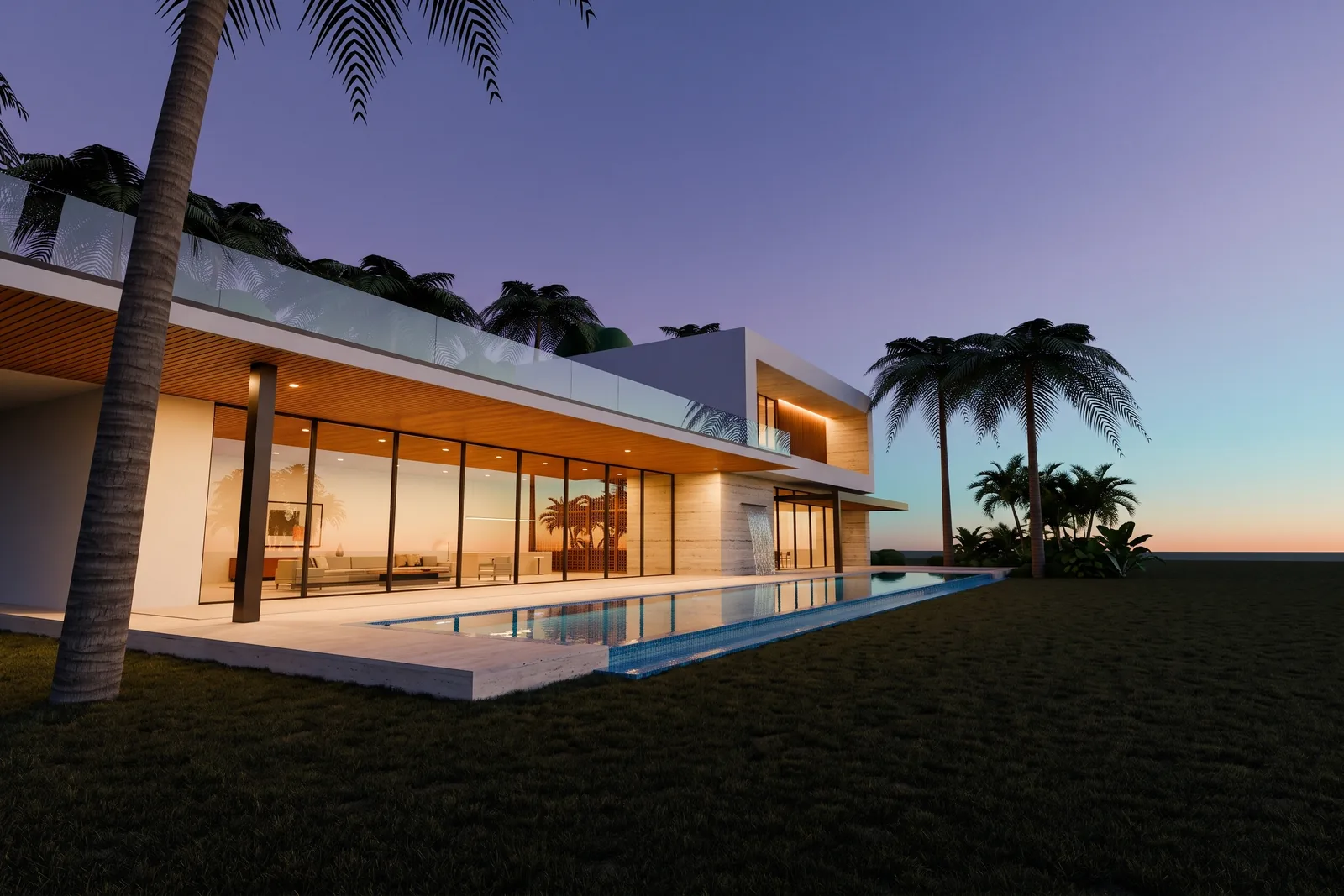
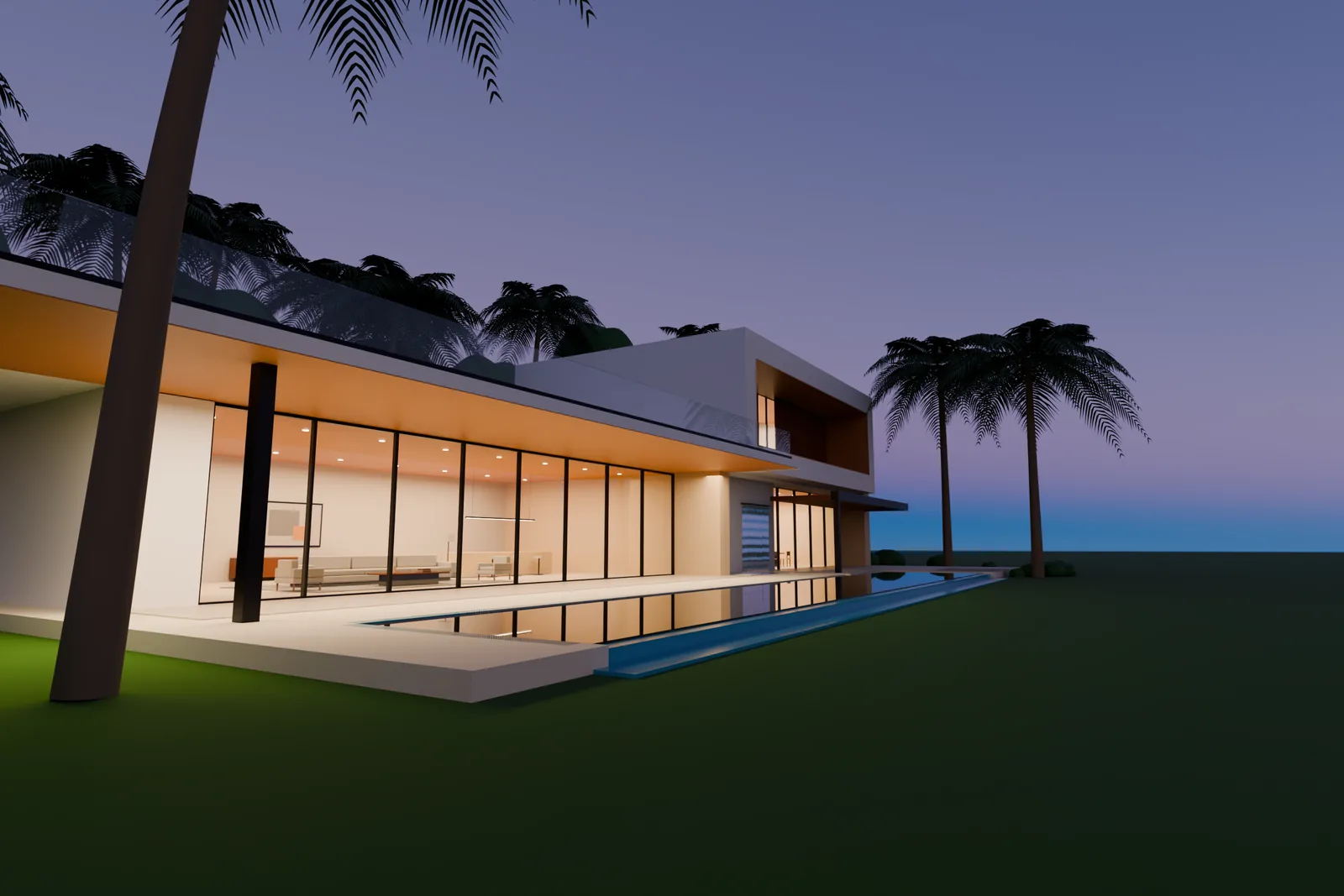
Turn basic colors into a photoreal image that keeps your materials and geometry, with a drift check to flag changes.
$29USD · One-time purchase
Buy for $29- Your own Google keyGoogle bills about $0.07 to $0.16 each.
- One-time purchaseNo subscription.
- Drift checkFlags changes against your model's edges.
Same model, same camera
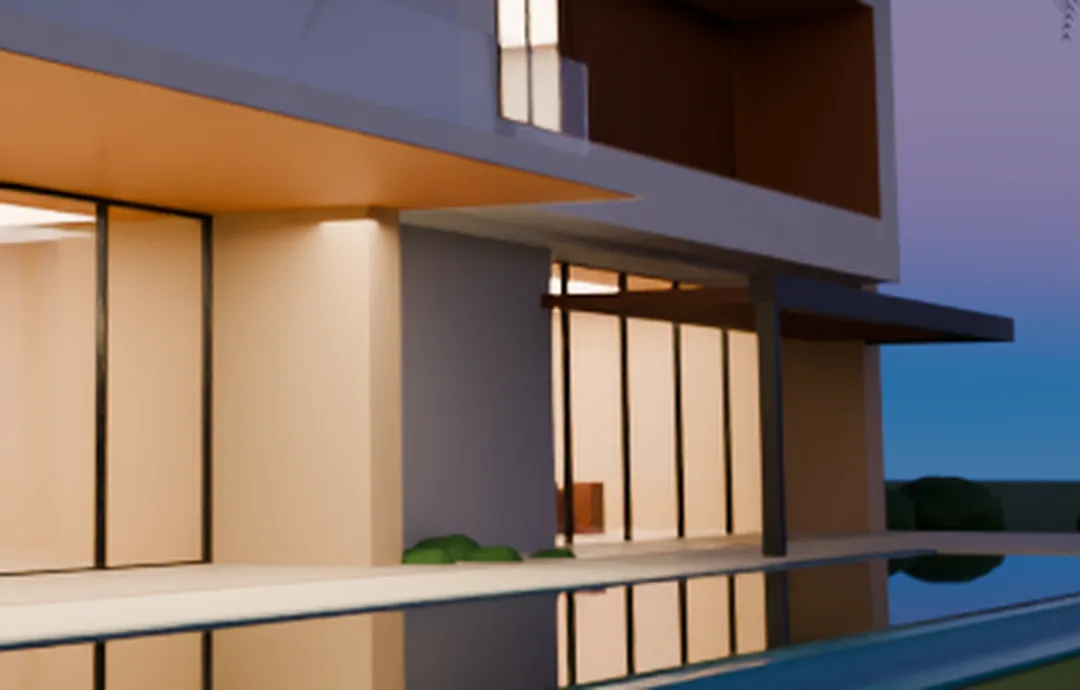
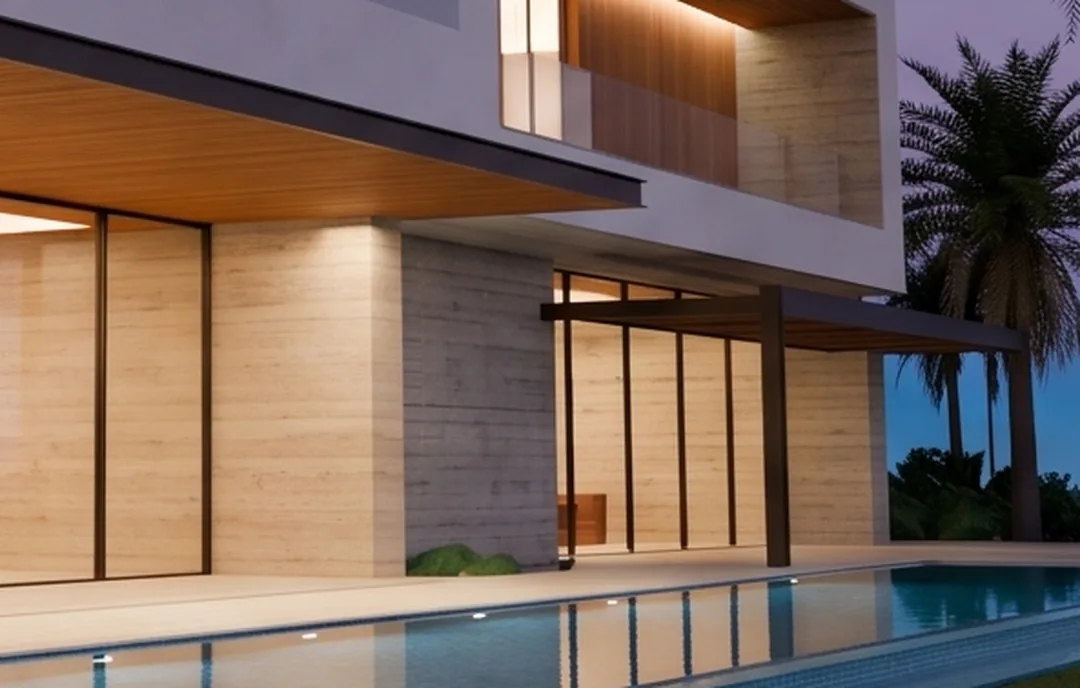
Compare the basic Blender render with each AI result. The camera and dusk light stay the same. You can also turn a Blender render into a watercolor for a presentation board.
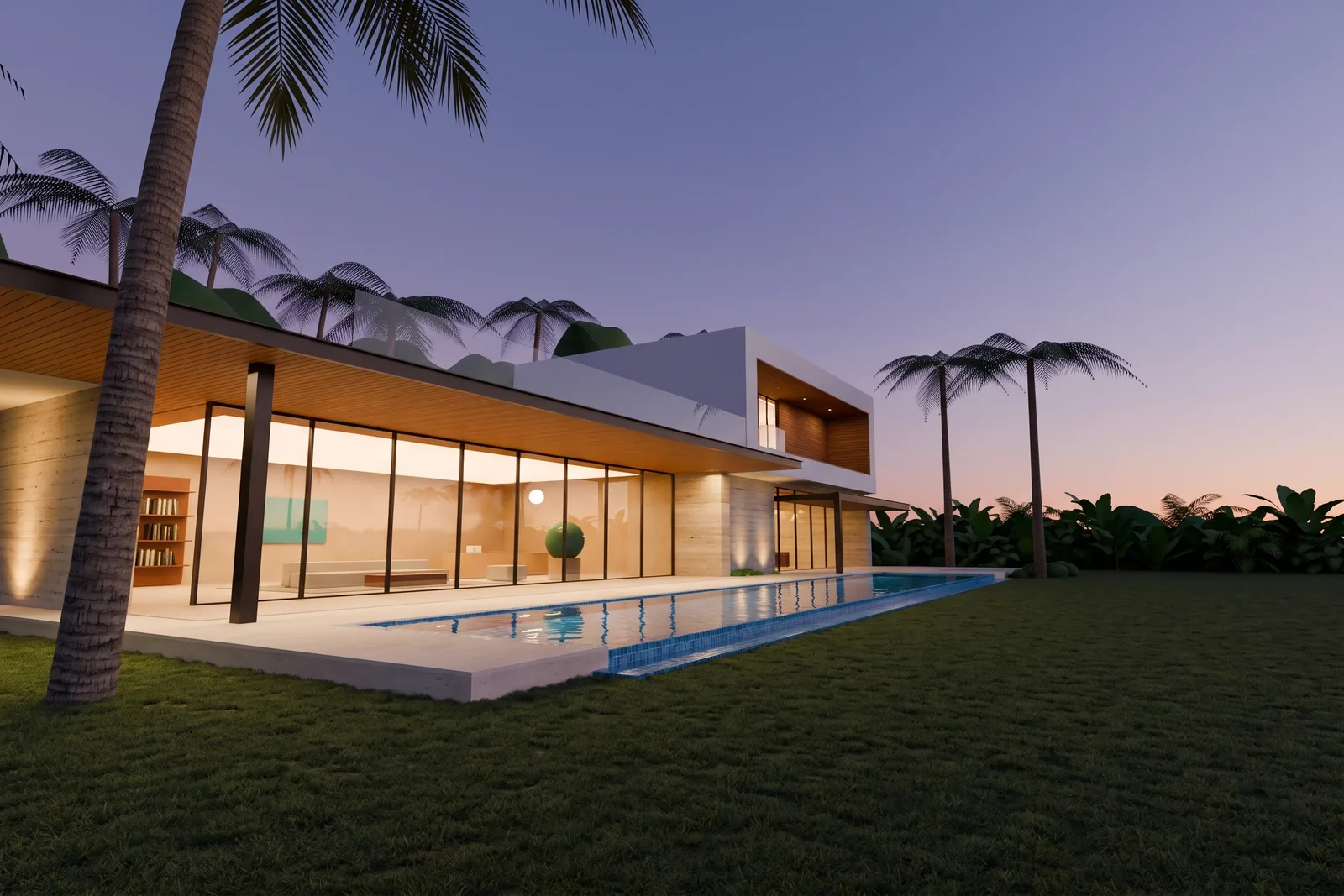
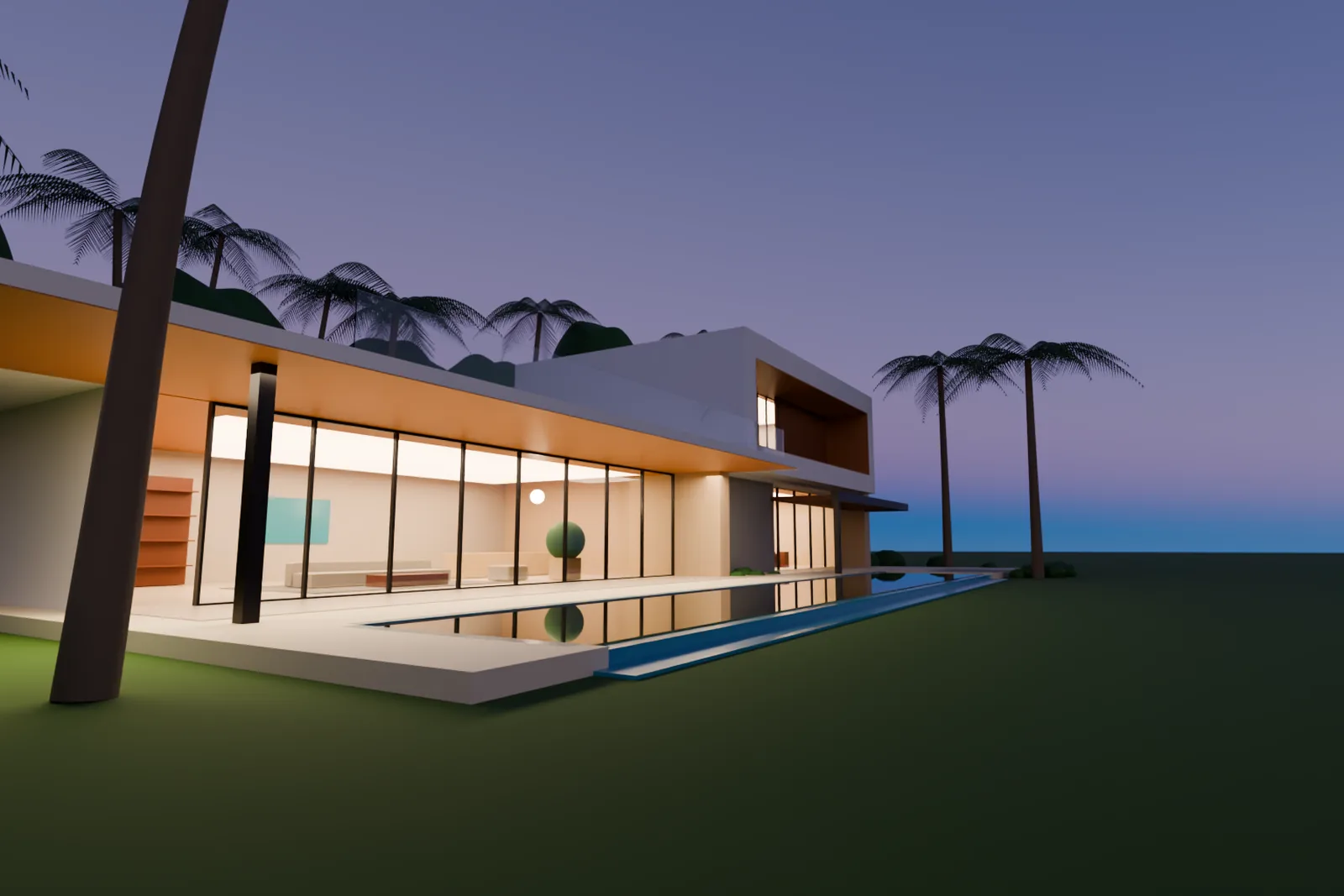
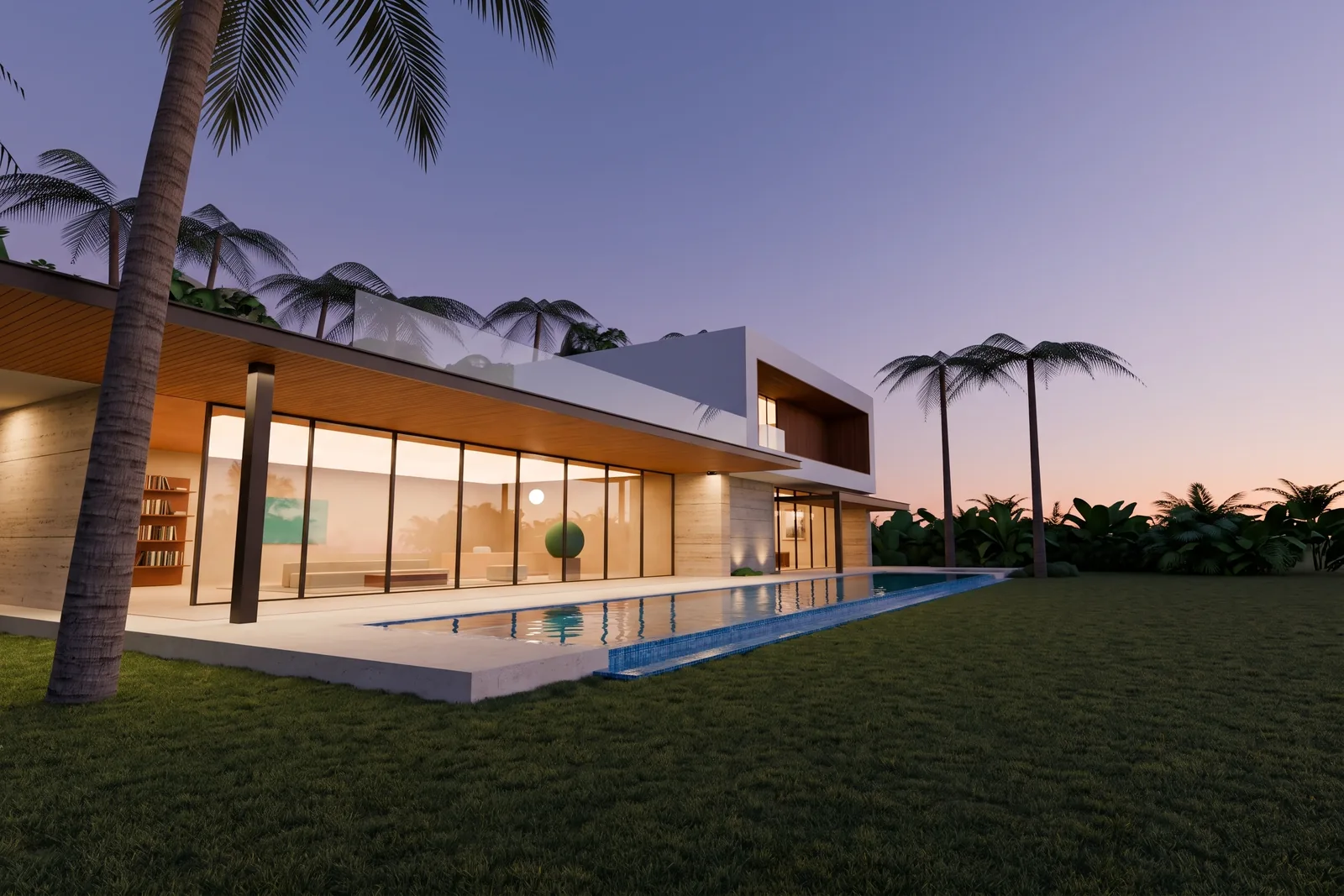
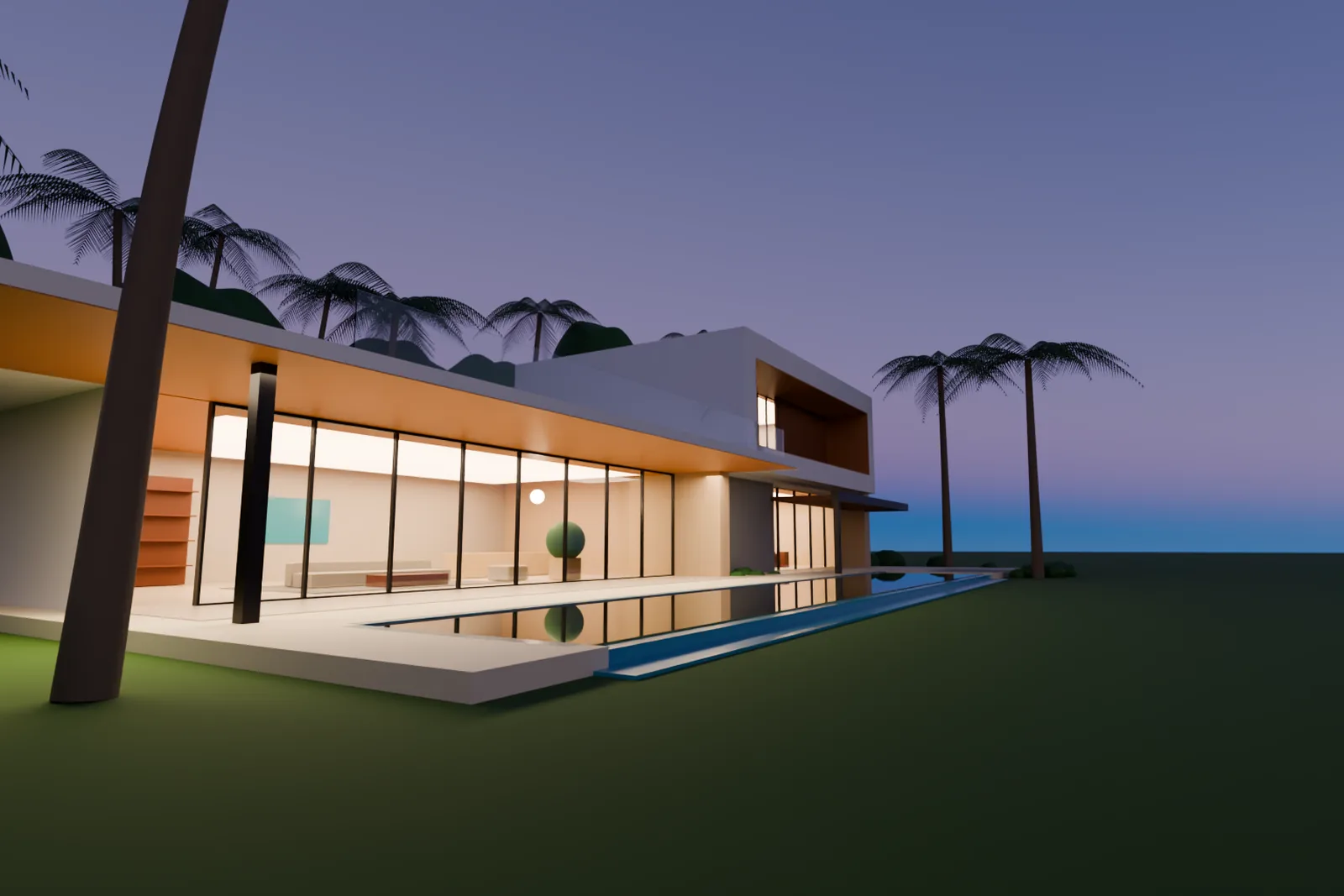
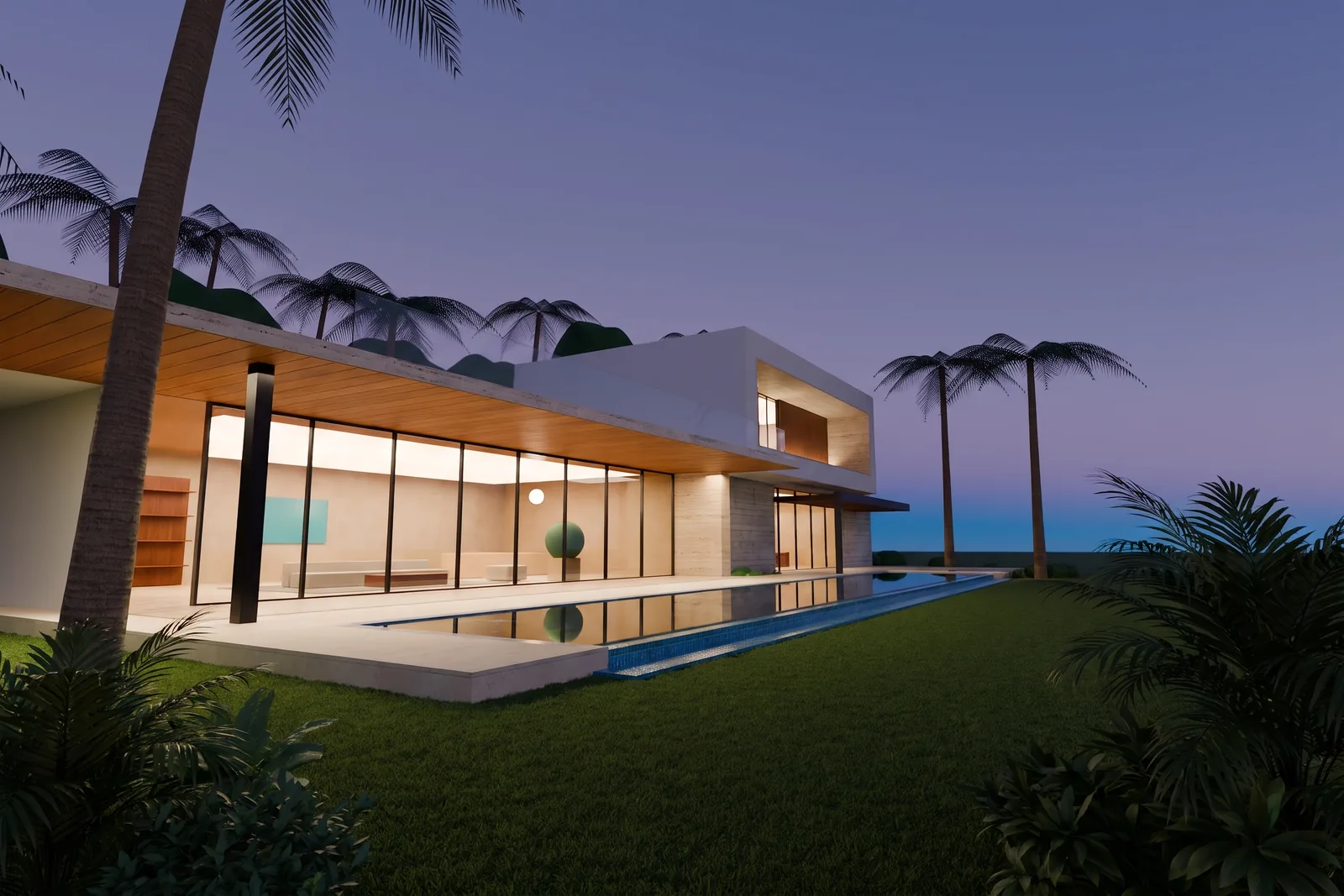
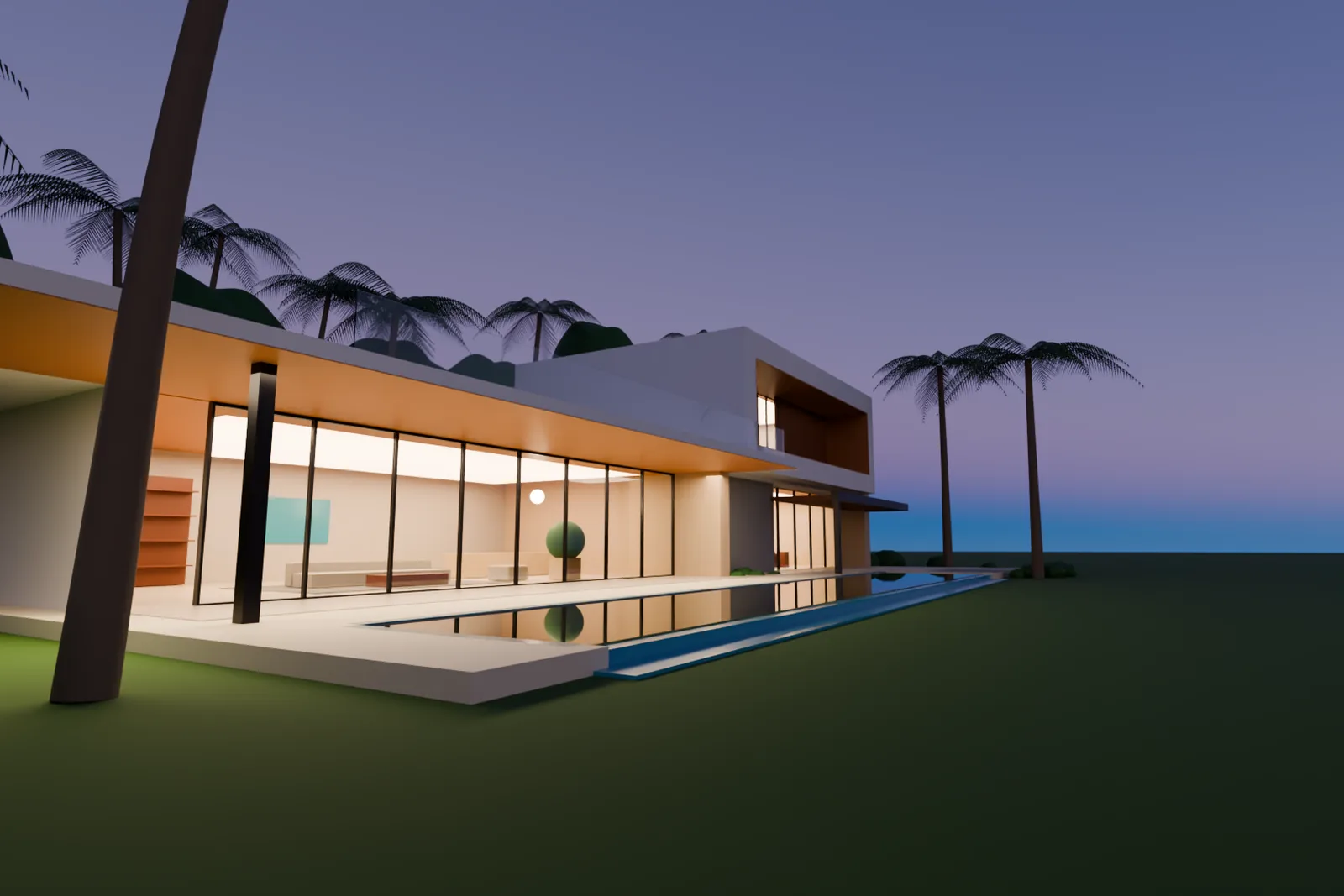
Unedited test outputs, Nov 20, 2026. Casa Sombra is a fictional house modeled for testing.
Control materials with color and tags
Give each material a basic color and a short tag. These guide the image. Use clearly different colors for neighboring surfaces.
- In tests, beige tagged travertine became honed travertine in horizontal bands.
- A distinct, lighter grey kept concrete beside travertine in 4 of 4 test runs.
- The add-on warns you when 2 materials have similar basic colors.
From model to image
- 01
Set colors and tags
In Blender, give each material a flat color and a short tag, such as "travertine, honed" or "board-formed concrete, raw".
- 02
Render the input passes
One click renders the base image, linework and depth from your camera. Your scene settings are restored afterwards.
- 03
Send to Gemini
The add-on sends your base render, linework, depth and material tags directly to Google using your Gemini API key.
- 04
Check the result for drift
Your image comes back with a drift check. Use its score and overlay to see where the AI changed edges.
Check the image against your geometry
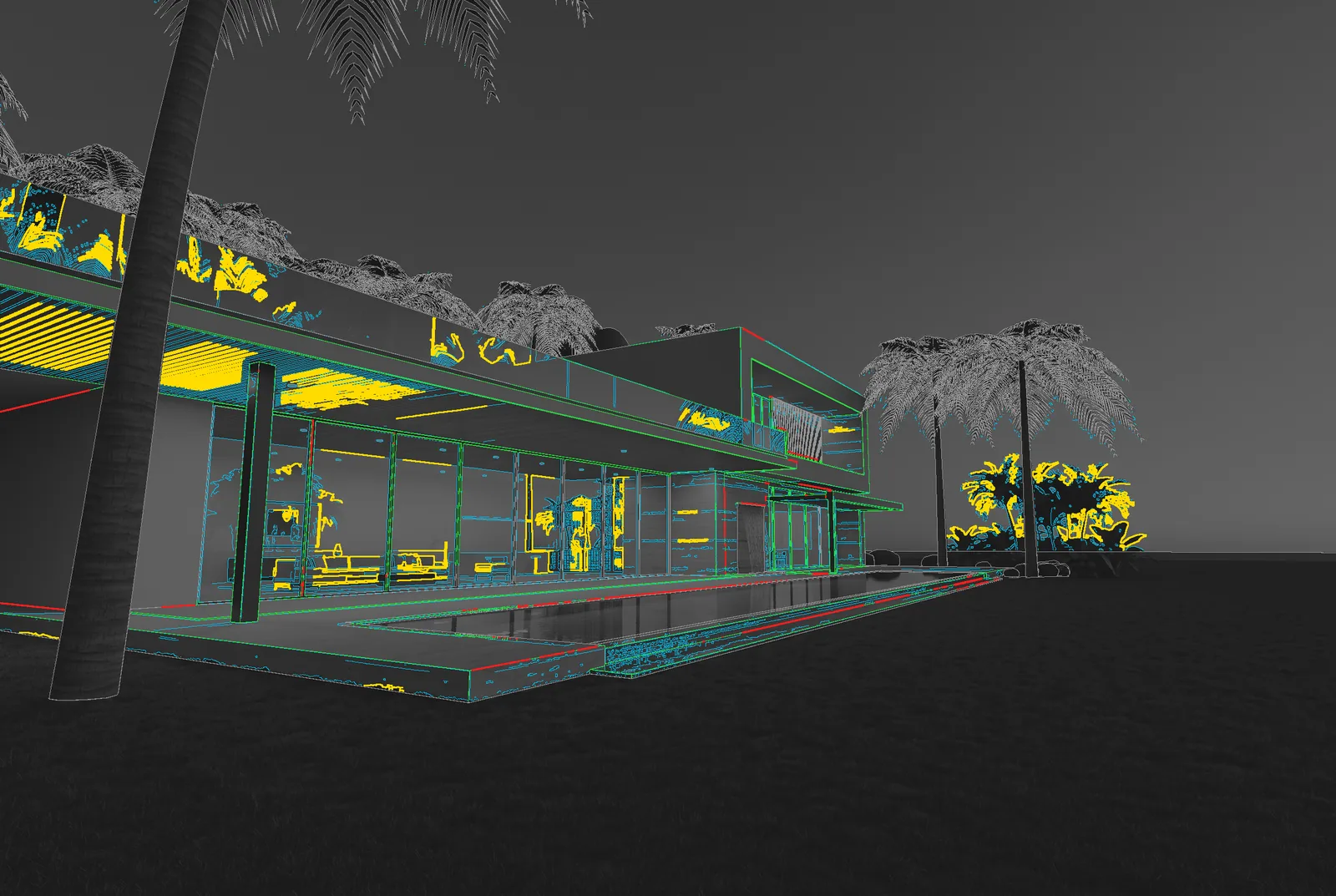
The drift check measures the AI image's edges against your model's true linework. It catches camera and large geometry changes, not material swaps.
Our AI-use rule
AI may draw, style and render geometry you modeled; it never adds to or changes your design.
- Get a mean edge distance in pixels and a pass/flag/fail verdict, calibrated on our test renders.
- Green marks matching edges, red marks missed edges and yellow marks added edges.
- The AI may still add plants, soften small details or reclad a surface.
Use your own Gemini key
Connect your Google Gemini API key with billing enabled. You pay Google for each image, separately from the add-on purchase.
| Nano Banana 2.1, 2K | about $0.07 per image |
|---|---|
| Gemini 3 Pro Image, 2K | about $0.16 per image |
Estimated Google prices for 2K output, November 2026. Google can change them.
- Requests go straight from your computer to Google.
- Your key is stored outside the .blend file. Skiaform never receives your key or your images.
- Skiaform charges no per-image fee.
Requirements and limits
You need
- Blender 4.5 LTS or 5.1
- Your own Google Gemini API key with billing enabled
- An internet connection while rendering
Good to know
- Tested on Windows with Blender 4.5 LTS and 5.1. macOS and Linux are untested.
- Neighboring materials need clearly different basic colors.
- AI may add plants, soften small details or reclad a surface. Check each result.
Not included
- Gemini usage. You pay Google separately.
- 3D models, materials, textures or lighting setup
Render your Blender model
$29 once for the download, plus what Google bills per image. For Blender 4.5 and newer.
$29USD · One-time purchase
Questions
Which AI models does it use, and what does each image cost?
Skiaform Render uses Google's Gemini image models. Estimated November 2026 costs for 2K output: Nano Banana 2.1 about $0.07; Gemini 3 Pro Image about $0.16. Google sets these prices. Each request returns 1 image, about 2528 × 1696 at 3:2.
Do I need my own API key, and where do I get one?
Yes. Create a Google Gemini API key in Google AI Studio and enable billing for its project. Add that key in Skiaform Render. You pay Google directly for image generation and need an internet connection while rendering.
Can the AI change my design?
It can. It may add plants, soften details or reclad a surface. In tests, good results stayed within about 1.4 to 2 pixels of the true edges at 1536 px wide. The drift check catches camera and large geometry changes, not material swaps or small additions, so check each image.
How do I tell it which materials to use?
Give each Blender material a flat color and a short tag, such as "travertine, honed". Use clearly different colors for neighboring surfaces. In tests, honey-colored soffits became timber boards, brown became oiled ipe and blue became mosaic pool tile.
Which Blender versions work, and can I use it on a Mac?
Skiaform Render has been tested on Blender 4.5 LTS and 5.1 on Windows. macOS and Linux have not been tested yet.
Is Skiaform Render a subscription?
No. Skiaform Render costs $29 once for the download. You pay Google directly for Gemini usage, and Skiaform charges no per-image fee. The add-on code is GPL.
What happens to my images and API key?
Requests go directly from your computer to Google. Your images and API key are never sent to Skiaform. Your key is stored outside the .blend file. Google's terms apply to data sent to Google.
Can I use the generated images commercially?
Google's terms apply to images generated through Gemini. Check the terms that apply to your use. You are responsible for how you use the images.
Test results, prompts and failure cases: Nano Banana for architecture, tested on a real 3D model